Moms Can Have Gap Years Too: A Conversation with Lindsey Goldstein
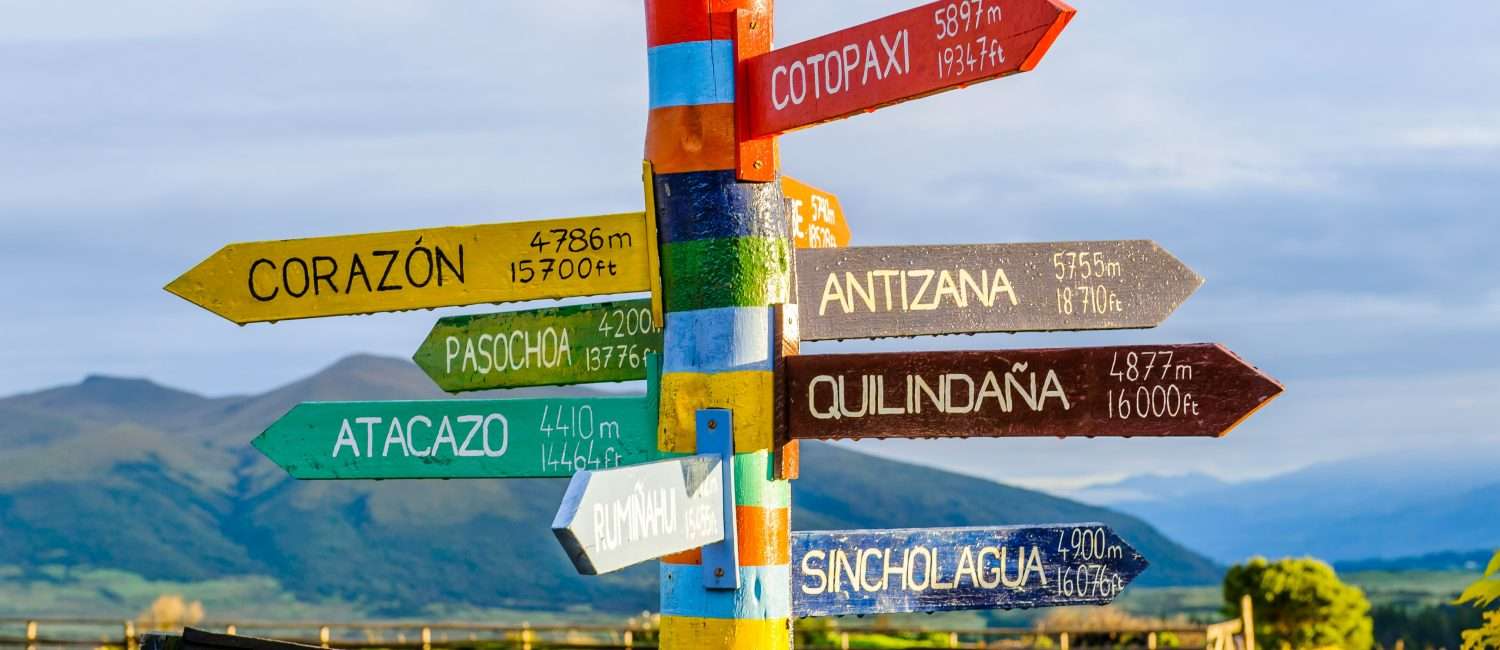
Ecuador had a magnetic pull on author Lindsey Goldstein since her first gap year abroad as a high school graduate. The small country in northwestern South America, with its legendary volcanoes, lush rainforests, and pristine beaches, captivated her so much that she spent two summers in Ecuador while a college student at Princeton University: one spent studying ecology in the Galápagos Islands and the other researching her college thesis in Quito, the capital city.
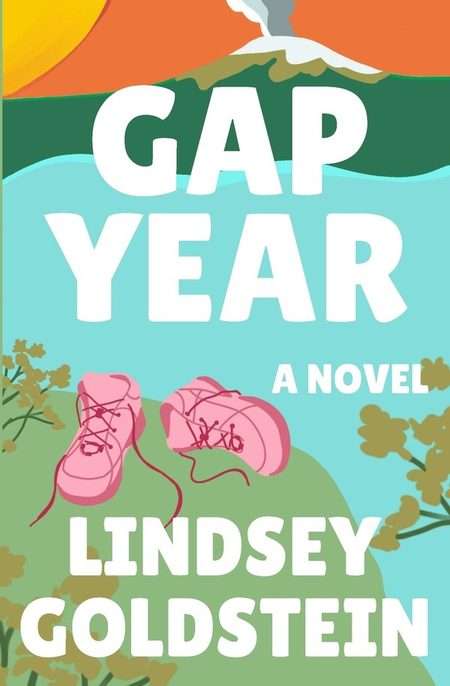
Goldstein’s innate familiarity with the country inspired her to write her debut novel, Gap Year, about Jane, a 46-year-old mother and wife struggling to make sense of her new and uncomfortable reality. Jane’s husband has left her for another woman, and her teen daughter Liza just departed for a gap year in Spain. Jane quits her uninspiring job as a CPA and impulsively decides to take her own version of a gap year. She buys a one-way ticket to Ecuador to achieve her lifelong dream of climbing the famous Mount Cotopaxi, an active stratovolcano and one of the country’s highest summits. The climb proves a harder task than she anticipated, but along the way Jane rediscovers her independence, finds romance and friendship, and connects with parts of herself she had long forgotten.
Goldstein, a physical therapist and mother of two who lives in Southern California, took her own opportunity to reinvent herself a decade ago. After publishing an essay in the New York Times’ Modern Love column in 2016, Goldstein decided to seriously pursue her love for writing fiction. The journey of becoming a debut author was a long and arduous one. Along the way, she discovered a supportive online community of writers who guided her on everything from writing query letters to finding agents, editors, and beta readers. She ultimately found success with Gap Year, her first published novel.
Alison Damast Dolinger (ADD): When we think of a typical “gap year,” we think of students embarking on adventures to find themselves before college. In your novel, you expand the concept to have a much broader definition. Why did you want to take the idea of a gap year out of the collegiate years and into mid-life?
Lindsey Goldstein (LG): In Jane’s case, it’s not a sabbatical. She quit her job, her marriage is over, and her only child has left home. I wanted her to be able to reclaim that gap year that she never got to take when she was younger because life got in the way. I think it’s becoming a trendy thing amongst middle-aged people to do this, and they’re calling it a gap year. You’re taking a year to reinvent yourself, possibly go in another direction, try another career when you get back or just expose yourself and your family to something completely different.
ADD: Both Jane and her daughter Liza have simultaneous gap years in the book. Her daughter Liza is in Spain, living with her host family before she goes to college, and Jane goes to Ecuador to follow her dream of climbing Mount Cotopaxi. Their experiences are radically different, but each comes away wiser, having learned valuable life lessons. Why did you think it was important to have this powerful mirror image of a mother and daughter pursuing a gap year at the same time?
LG: It was important to me because in the book they are both embarking on their own journeys, where they’re each separately finding their independence. I wanted them to have these mirror experiences for that reason. For Liza, she’s a new adult and her mom wants her to take a gap year so that she learns not to come to her parents for every decision she makes moving forward in her life. It’s the same thing for Jane. She hasn’t been by herself in a very long time. She is figuring out how to operate by herself as a grown woman and find her independence in this new chapter of her life.
ADD: Jane’s goal is to reach the summit of the Cotopaxi Volcano, an arduous undertaking. She needs to buy special hiking equipment, do long training hikes, and acclimate to the altitude. Does the volcano stand in as a symbol in the novel for Jane?
LG: I think so. I felt like she had to surmount a big, physical obstacle to prove to herself that she could overcome all these other hurdles in her life: the end of her marriage, the loss of identity because she doesn’t have a child at home, and the uncertainty surrounding her career path. For me, my Cotopaxi was getting a Modern Love column published in the New York Times. Once I did that, I knew I could take on writing a novel. It was the same thing for her. She believed if she could get to the top of a volcano that’s almost 20,000 feet and not die, then she could figure out the rest of her life and the direction she wanted to go in. It’s somewhat cinematic. You can visualize this person doing this, but it’s also a huge challenge and she needed that challenge to kick her in the butt to get her to the next step in her life.
ADD: The time when children leave for college can be a challenging transition for moms as they face the reality of an empty nest for the first time. Not everybody can be like Jane and have the time or the resources to take a year off to go live in Ecuador, but are there ways moms can infuse the concept of a gap year into their lives in smaller and more manageable ways?
LG: Absolutely. One of the messages I hope people take away from my book is that it’s never too late to do this. You can take steps in midlife when maybe you’re starting to feel a little bit lost and feel like you don’t know who you are. It doesn’t have to be a whole year away. It can be as simple as taking a class in something you’re passionate about, a long weekend retreat to reclaim parts of yourself, or even exploring something that you always wanted to do when you were younger. I think moms should give themselves permission to start to take that time now when their kids are still in the home and not feel like it’s selfish to do so.
ADD: There’s a certain amount of guilt Jane feels as she transitions to this new stage of life. What was it like writing about mom guilt, and do you experience any mom guilt yourself as a writer?
LG: My oldest child hasn’t left the home, but I could imagine Jane feeling guilty as she was going through the process of finding her own independence. I’m Jewish and it’s just part of my identity to always feel guilty. Liza, Jane’s daughter, was going through so many things on her own. Jane knew she couldn’t be there to give her a hug and there was just this overwhelming sense of guilt. At the same time, she knew that if she didn’t cut the cord, Liza would not be able to really flourish on her own, and again, that was so important to Jane.
ADD: You work as a physical therapist and have two kids at home, so finding the time to write must be a challenge. When do you find time to work on your novels, and do you have a daily writing routine?
LG: There isn’t really a daily writing routine, it’s more grab the time when I can. I don’t work every day as a physical therapist by design. I probably average writing three days a week, but it’s only when my kids aren’t there. I don’t have time to write every day, but I make sure I’m writing several days a week, whether it’s for an hour or four hours; I’m getting the time in.
ADD: You have some memorable male romantic figures in the book, from the handsome tour guide Jane meets at her hostel in Peru to her witty coworker from her old accounting job. You describe yourself as a writer who writes fiction novels with romantic elements. Why do you make that distinction, and do you feel like there are any perils to being labeled as a romance writer?
LG: No, not necessarily. I just know that if anyone picked this up with the idea that it is a romance, they would be disappointed because it’s not a romance. The traditional definition of a women’s fiction novel is a woman who is starting at point A and has some sort of arc and winds up at point B. I think I followed that traditional definition, but I also wanted to hopefully embrace other readers who want that romantic element by saying, “Wait, there’s more.” Some people have likened this book to Eat, Pray, Love, which, even though it’s a memoir, ultimately has a romance. Marketing my book like that was a way to pull more readers in.
ADD: Do you think you’ll ever take your own gap year when your kids have left the home?
LG: I keep threatening my husband that I’m going to take a very long writer’s retreat. I have this romantic notion of a castle somewhere in remote France where I can just hole up for a few months and write during the day and eat really good food at night. I would love to have the freedom to travel more. Right now, we are limited by my kids’ school schedules.
I can see myself doing more short-term trips on my own in the meantime. When I turned 50, I told my husband I’d figured out what I wanted to do for my 50th birthday. He said, “Oh, great, what are we doing?” I told him I just had this desire to go to this place in Sedona, hike and kind of reflect on the first 50 years of my life. I said, “I’m going to go there and you are going to stay with the kids and the dog while I go there for almost a week,” and that’s what I did. I can see myself doing more short-term things like that.
AD: What appeals to you about writing second-chance stories, especially ones where mothers are featured as the protagonists?
LG: It appeals to me because I’ve been living it, and I’m fascinated by women who reinvent themselves later in life. I’ve now encountered quite a few. I’ve been recording a lot of podcasts to promote the novel, and a lot of the podcast hosts are people who have reinvented themselves, or who interview others who have done so. I like the notion that it’s never too late to do anything. As a physical therapist, I see patients who are typically 80-plus. I constantly hear the refrain from them, “If there’s something that you really want to do, don’t wait, just do it.’” That applies to everyone, but as a mother, I have had moments where I’ve felt like I’ve lost parts of myself and that’s a bummer. I want my kids to have a great life, of course, and feel like I’m there for them, but I also don’t want to just set myself aside. I like to explore that concept through fiction, and I continue to do so. I’ve now completed another novel that has similar themes. I think it’s almost like therapy for me.
This interview has been edited for content and clarity.