A Quilt of Loss and Mothering: A Review of Certain Shelter
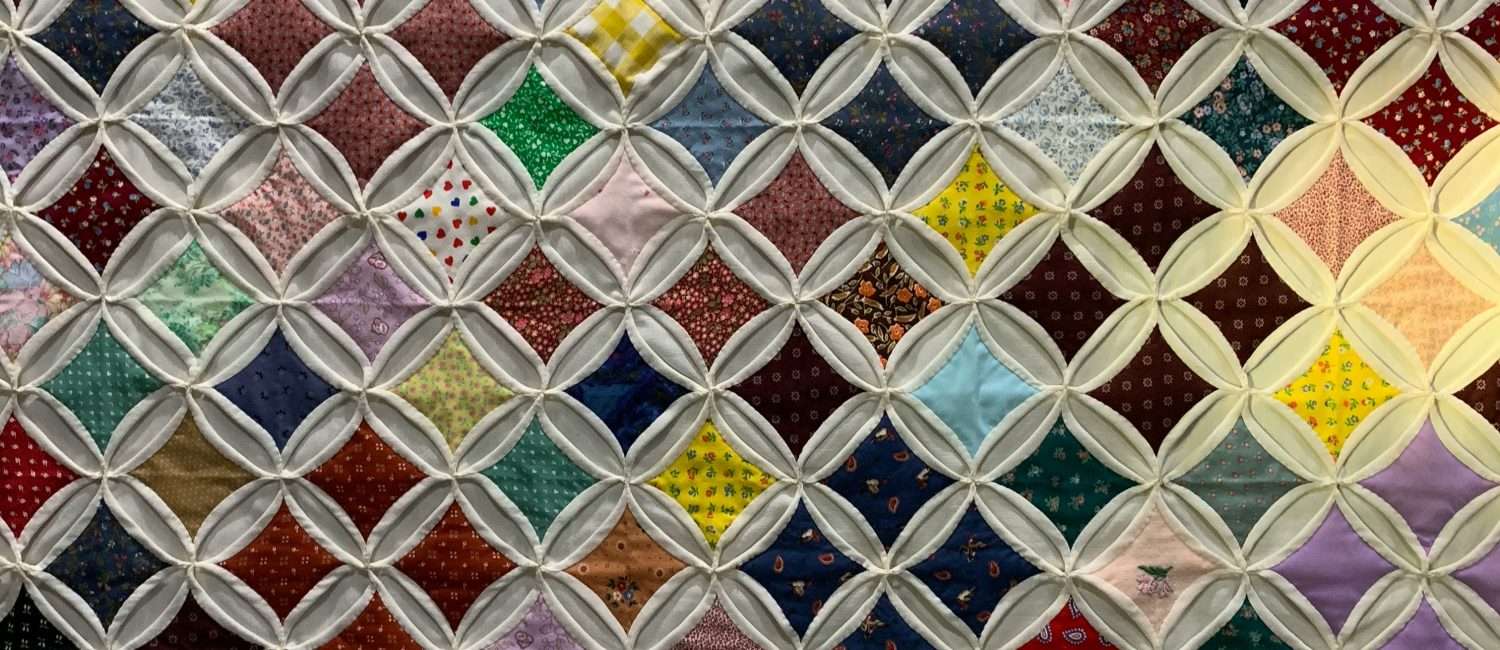
Early in Abbie Kiefer’s first full-length poetry collection, Certain Shelter (June Road Press 2024), she writes about a quilt, a wonderful metaphor through which to understand this beautiful, accessible, and quite moving collection. Like a quilt, in which scattered pieces of fabric are used to create a new whole, Kiefer stitches together scenes from a diminished former mill town in Maine with her grief for her recently deceased mother and her struggles with motherhood, career, and midlife.

What unites these concerns is Kiefer’s attention to the quotidian and an ability to parse new meanings from common language, as in the first poem, “In Praise of Minor.” While she starts by praising minor poets “faithful to work that will meet / with quiet,” this call seems to be an early statement of the ethos that guides this collection: a celebration of people whose lives are defined by hard work that is not always seen or appreciated by others. In the same poem, she plays with language and dances through college minors (“Brewing. Cinema. Latin, though long / dead.”), the constellation Canis Minor, minor inconveniences like onions on a sandwich that “made the line cook cry,” and a minor league baseball player hoping to be called to the big leagues in Boston. She then ends on a “minor” storm that seems more like a menacing metaphor for difficult times ahead in her community:
September, and cold is rolling in
from Casco Bay. The sky is burdening;
they’re tarping the field. Still, we could stay.
Maybe minor weather. Showers passing by.
The conflicting forces of doubt and hope implied by the words “Still, we could stay” are layered through the collection as Kiefer explores the ties she feels to her home, the disorientation and loss caused by the closure of her community’s paper mills (“The Mill Makes an Announcement”) and the Bass shoe factory (“My Friend Tells Me about the Last Day at the Bass Shoe Factory”), and the community’s various attempts at economic revitalization (“Revitalization Efforts: Six Miles of Track Abandoned by Maine Central Railroad”).
In “All the Things I Can’t Remember,” Kiefer similarly braids moments of motherhood with her mother’s illness and the larger changes in her community. She first captures a classic domestic moment watching her two young sons play as she does a crossword one morning:
Colliding cars into couch legs, our older boy stops,

pats the little one. Tells him We’ll be brothers forever

and runs a Jeep across his head.
She then quickly leaps to the ambient pain in her town (“Stilled factory and streets / electric with longing.”) and her own recently deceased mother (“in swallowing / pajamas. In those weeks when the Tarceva stopped working / for good.”). Kiefer does similar work through the title “When My Mom Has Been Dead Eight Months, They Tear Down Lucky Candlepin,” in a poem that laments the end of a childhood haunt against the background of a greater personal loss:
We didn’t wonder
at their steady return, how
they rose from the floor. Pins,
every frame, brought back
to standing. We bowled
and bowled,
no one losing. Never bothered
keeping score.
The dead mother was perhaps taken for granted like those never-ending pins or even the bowling alley itself. Rather than approaching community changes or a mother’s death or motherhood in a single poem, Kiefer, who is a poetry editor at The Adroit Journal, skillfully weaves these ideas together, which is of course how we experience life, with all our concerns for ourselves and our family and our world in a unified experience of reality.
A part of that reality today is the influence of television and how it creates common points of reference in an otherwise fragmented culture. An important thread woven through the poems is their frequent, surprisingly effective tie-ins to classic TV shows like M*A*S*H, Antiques Roadshow, Jeopardy!, Cheers, Bewitched, Mister Rogers’ Neighborhood, The Wonder Years, and The Great British Bake Off. For example, in “On Antiques Roadshow, Her Quilt Might Bring Six Hundred at Auction,” Kiefer discusses a quilt made by an otherwise forgotten great-aunt during the Depression out of “feed-sack florals” with seams as straight as her husband’s “Yankee-stern mouth,” which might have fetched more money on the show “If the quilt were unused. If its fabric were rarer. / If farm grit didn’t filter into every soft thing.” With her reference to the well-known TV show, she allows us to understand the bittersweet reality of cherished items—and perhaps people—that don’t always find monetary value in the marketplace. Likewise, in “On Cheers, Diane Has Pursued Graduate Degrees in Thirty-Seven Disciplines,” Kiefer finds kinship with a TV sitcom character and harnesses the thwarted ambition of many creative mothers as they attempt to fulfill their dreams while fighting the exhaustion of caregiving:
Sometimes I let myself stream part of an episode—too regret-spent
for sleep, too scattered to work. I open another tab on my browser.
I like how Diane’s apron always havens a book. And the seriousness
with which she carries herself, claiming writer when the others say
waitress. Always on her feet with her tray, conveying,
and I appreciate that too. But the three-dozen undone
degrees? And she says she’s only one
credit from earning each. Diane. All that fuss
and nothing yet finished—
not your courses, not the dull heft
of your hunger. Can’t you see yourself
through? Can’t you just
The unfinished sentence—and preceding diatribe towards Diane—can be seen as a metaphor for the frustration that we mothers sometimes feel for ourselves when we are not able to accomplish all that we wish to in this life.
Although this collection deals with themes that are universal, Kiefer’s work is firmly based in her life in Maine. Throughout the book are references to her Yankee heritage and prose poems that poignantly discuss “brief histories”: of agriculture in Aroostook County in rural Maine, of the anticancer drug Tarceva, of secondhand smoke, of the Sisters of Mercy in Portland, of “Maine Industry,” and of “Yankee Thrift, Yankee Ingenuity, and Yankee Work Ethic.” In this last, a prose poem, she begins,
To make. To make do or do without. To trust your own two hands, maybe too much. To save the bent nails in coffee cans. To fold the ratty towels. To value the threadbaring towels and the labor of squaring them up. To be scrappy.
and later ends, “To hear a person say work and swear he said worth. To do. To do. To abide in spareness and rarely be spared.” In these few lines Kiefer fully describes the arc of hardscrabble lives lived with dignity. In her “brief history” poems, she also claims kinship with E. A. Robinson, a now little-known Maine poet who won the country’s first Pulitzer Prize in Poetry in 1922 and similarly wrote about archetypal New Englanders.
However, Robinson is not the only spiritual ancestor of Kiefer’s work. Those who admire Maggie Smith’s poems, with their themes of motherhood and life in a small Ohio town, will find a kindred soul in Kiefer. There are also easy ties to Philip Levine’s celebration of everyday working Americans.
With Certain Shelter, Kiefer gives readers a memorable, beautifully crafted, and highly readable quilt of a collection whose poems confirm that she is a poet to watch in coming years.