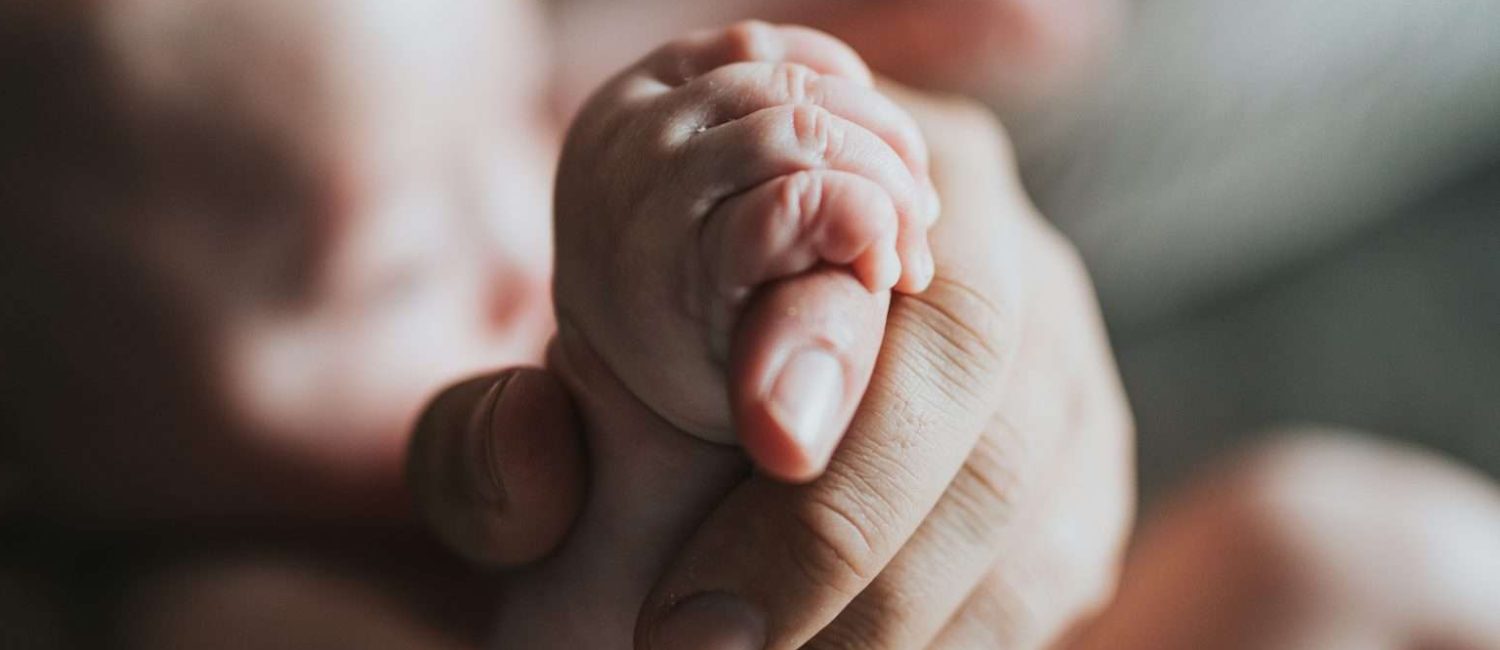
A Ruptured Beatitude
Joanna closes her eyes to the soothing alto tones of the midwife. “Place your hands on your belly. Imagine your fingertips sending light and love to your baby. Inhale. Exhale. See yourself easing into a pool of warm water. Now imagine your body preparing for a contraction and inhale all the way into the bottom of your lungs then exhale while relaxing all the muscles around your baby. Gentle hands on your back rub away any pain you might have. One final breath. Now picture the baby being released. Immersed in water, it barely knows it has been born.”
Joanna opens her eyes and sees the midwife and Robert smiling at her as if she were the Madonna. She doesn’t tell them of the images of glaring lights, loud voices, blood and fluids that infiltrated her meditation.
“You should do this visualization every day. What you see in your mind will be made real,” the midwife says.
The next evening, Joanna brews a cup of chamomile tea made from organic flowers to prepare for her visualization. She loosens the fat, brunette braid that falls down her back, her scalp easing at the untwisting of the final strands. She rubs Burt’s Bees Mama Bee Belly Butter on her stretched olive skin. At seven months, the baby is a perfect, compact ball resting under her veined breasts. Something—a foot, a knee, a head—does a slow traverse left to right. She shivers. In her body is a creature who has no idea who Joanna is and doesn’t care. As it feeds on the nutrients Joanna ingests, so it will feed on her dreams. Her hours will become the baby’s hours, her days the baby’s days. The eyes through which Joanna sees the world will be that of an infant. And she will be the husk left by the parasite.
This is the wrong visualization. Joanna takes a sip of tea, adjusts the pillows supporting her back. She fans her hair around her shoulders and strokes it the way she used to as a child to soothe herself. She closes her eyes. Sending light. Warm bath. Inhale. Exhale. Gentle hands. She can feel the weight of her hair as it falls over her breasts. She sees the baby there getting tangled and strangled by the long tresses, being suffocated as the murderous tendrils fill the tiny nose.
The tea has grown cold. Joanna focuses on the silence. Her greatest wish right now is for the key in the door to never turn, for the other side of the bed to remain unoccupied. Alone with her baby, she whispers, “Can you hear me?” She places her hands on her belly. “Can you feel me?” She waits, wanting the baby to answer, afraid that it will and she won’t be able to answer. No voice comes.
She gives up on meditating for the night. Robert is away at a conference on global health, something about maternal mortality rates that she can’t help but see as a bad omen. She flings her arms out wide, lies diagonally on the bed, kicks the covers off when she gets hot. She rarely found sex satisfying, but pregnancy, all that extra blood, has made her crave it. She places her hand between her legs and climaxes within moments.
Robert—never Rob, Robbie, or Bob—once suggested she see a sex therapist. Alone? How would that work, she wondered? They had been going out for several months before he made love to her. She was used to the college boys with their beer breath and fake swagger, boys so eager that they came far before a girl could begin to feel any pleasure.
Robert’s lovemaking was considerate, almost methodical, like he had read a manual on where to touch, what to say, how long foreplay should last before penetration. Joanna came but with only as much passion as she felt when she masturbated.
They had met while she was working backstage at her college theater where Robert was giving a lecture on human rights and medicine. At age 24, genius was the greatest aphrodisiac for Joanna, and Robert was brilliant. Not only did he look the part—with his thick dark brown hair slightly graying at the temples, his tailored European suits, the reading glasses that perched on the end of his straight Grecian nose that added wisdom rather than age—he dedicated his life to the world’s poor.
After the lecture, Robert invited Joanna to dinner. He opened doors for her, pulled out her seat at the table, suggested what she should order, rose when she stood up to go use the bathroom. He asked the right questions.
“Are you a student at the college?
“Yes. I’m a visual artist studying for my MFA.”
“Oh? Tell me about your work.” Robert paused in his eating to ask this question, as if he wanted nothing to interfere with her answer.
“I do pencil or charcoal portraits; at least that’s what I’m doing right now.”
“Perhaps someday you can do mine.”
Robert didn’t seem the type that would ever allow himself to be studied as closely as she would need to draw him. But at the moment she didn’t want to know his vulnerabilities, his faults, the places where his mask fell. What she felt was the relief of believing he would take care of her without any expectation that she would have to care for him.
It was so gradual when caring turned into control that Joanna didn’t notice. She thought she was the one who decided her new haircut was more flattering, her friends didn’t support her the way she thought they did, the books she read didn’t challenge her.
In the four years they had been together, though, as Joanna became respected as an illustrator for a graphic design firm, Robert’s moral imperatives—the way he held his chin slightly up and to the left so his eyes were always looking down at what was in front of him, the “hmm” sounds he made to show he was listening carefully, the zealousness with which he flossed his teeth and trimmed his beard—made him seem more like a rooster who didn’t know he had no comb.
When she first learned she was pregnant, she made an appointment with her ob-gyn where Robert joined her in the exam room.
“So Miss Davis . . .” the doctor began.
“Joanna, call me Joanna. I prefer that.”
“Okay. Joanna. Should I assume you and Mr. . . .”
“Parker,” Robert answered.
“Mr. Parker then,” the doctor answered, her voice losing some of its warmth in response to Robert’s formality. “Should I assume you both want the baby?”
“Of course we want the baby. I’m 45 now, and I want to have children before I get much older.”
“Joanna, you said the pregnancy wasn’t planned. Are you having any doubts?” Perhaps it was the shredded tissue in her hands that gave her anxiety away.
“No. Not doubts. It’s more like fear.”
She didn’t want to admit how afraid she was. Robert would have accused her of being dramatic. But, at 28, she had just started feeling like an adult; the agoraphobia and disordered eating of her undergraduate years, the conviction that at any minute she would self-combust, had subsided. But they remained as ghosts in her peripheral vision.
“Robert would like us to have a home birth. I’m worried it’s not safe.”
Robert had told her that his mother almost died giving birth to him because his father, a physician, thought that doctors were gods and hospitals Mount Olympus, so he never questioned the Demerol and Pitocin, then the morphine and scopolamine to induce twilight sleep, the restraints, the forceps, then ultimately the emergency C-section. He heard his birth story countless times from his mother, who as a result could no longer have children, and decided at age 12 that he would be a doctor and practice a different kind of medicine. It would be his apology to his mother. He excelled at book learning but it turned out that the actual practice of medicine was too incompatible with his fastidious nature and his inability to cope with uncertainties. But this was not what he told the doctor.
“I’m the head of a large foundation that trains midwives around the world.” Another mea culpa for his mother. “I’ve explained to Joanna how important this is to me.”
The doctor gave Joanna a chance to speak. She, after all, was the one actually having the baby, but her only response was a slight curling of her body, as if to promise her baby she would keep it safe.
“You don’t have to decide this right now,” the doctor said. “Here’s a brochure listing our services, which include meditation, a variety of classes, and counseling. I’d be happy to arrange a tour of our birthing suites, as well.”
Robert barely looked at the flyer once they were outside. “Joanna, you’re going to end up loving the whole experience of giving birth at home.”
“I’ll use the midwife and deliver at home, but only if I also see my doctor.” A small rebellion on Joanna’s part, but a dissent, nonetheless.
Now she’s just over a month away from her due date. Robert has stopped traveling and never stops observing her. “I don’t know what you’ve been so afraid of all this time,” Robert says. “Your body is made for pregnancy. You should be on the cover of every book and magazine for pregnant mothers. You’d be such an inspiration.”
Robert is stupid that way. She imagines pregnant women with swollen feet, heartburn, and tent-like clothes passing a newsstand on the way home from work or at the supermarket and spitting on her image. What would the women in the care of his midwives think?
She has continued to do her meditation but can’t bypass fraught images to arrive at the actual birth of the baby. She brings a chair into the room that will become the nursery. If she can picture the baby here, maybe she can imagine it being born.
The walls are cream-colored and, so far, the only décor is a large wall painting of a leafy tree with birds in its limbs and animals frolicking in the grass below that Joanna painted, the only time during her pregnancy when she felt optimistic. The furniture Joanna ordered—the crib, the changing table, the rug with moons and stars and hearts, and the glossy white rocking chair—will be delivered as soon as she gives birth. The woman at the store told her it was bad luck to have the nursery set up before baby is born. Baby, not the baby.
Lately, Robert has been sending her links to sites selling organic cotton baby clothes, biodegradable wipes, and unscented and phosphate-free lotions, soaps, and shampoos. Yesterday’s link was to an article on the benefits of cloth diapers over disposable.
The only item that really matters right now, though, is the bedside bassinet that will be placed next to her side of the bed. Scrolling online through the various options, Joanna was seduced by the pictures of mothers lying next to their babies with easy smiles and clean and coiffed hair. She knew this was a fantasy. Even without a baby, few women look like that after waking up, but she has imbued the bassinet with beatific and soporific powers.
The crib Joanna slept in as a baby conjures images of harried mothers swooping into the room where their babies slept alone. It was made of dark wood with pink, blue, and yellow teddy bears painted at one end. It had bumpers printed with rocking horses. Joanna’s baby would never have bumpers on her crib or a blanket that could trap a baby or stop its breath. The baby would be swaddled and placed on an ungiving mattress on her back. It seemed so uninviting and exposed. But Joanna would be right at her side.
Joanna sits and closes her eyes and begins her inhales and exhales, feels the hands, moves toward the warm water but, as she’s about to step in, images of her own childhood bedroom float up—the closed door, the ghosts she imagined billowing like smoke from under her bed, her body curled against the white Sheetrock wall. When her infant sister moved in, Joanna prayed that she would cry so her mother would come. But the most the baby ever did was whimper. Once, Joanna wanted her mother so badly, she pinched her sister to make her cry. Her mother came but gave Joanna a side-eyed glare. Joanna didn’t know that babies had enough different kinds of cries to make a language.
Joanna was moved to a toddler bed when she turned three. The first few nights, she kept falling out. Her mother always came and tucked the rainbow sheets and blanket back around her so she could imagine her mother was still hugging her. Even when she stopped falling for real, she dreamt about plunging through the air. She remembers falling with the speed of a hawk diving for food but without the control, her stomach rising into her throat, her eyes squeezed shut. And just when she was about to hit, she would wake up. Heart pounding, eyes still scrunched. Afraid to open them in case she would see blood and mangled limbs.
This image jolts her back to the present—to the nursery, the mural, the chair, the baby. She takes slow breaths, in and out. She closes her eyes. The mural transforms into the tree that grew outside her childhood bedroom window whose limbs in winter became huge, gnarly arms coming to snatch her away. She remembers waking in the night, seeing the glint of the silver knob on her door, and imagining herself stepping out into the hallway, calling for her mother who never answers because she has vanished.
Now, in her meditation, when, behind closed eyes, Joanna opens the door, she is in her apartment. It is the day of her baby’s birth. She sees the birthing tub, walks toward it and steps in. She wonders where Robert is and the midwife. She starts to sit. Pain comes at her like a murderer. Her mouth opens in a scream.
“No, no, no. Wake up. This is the wrong meditation. Again. Why can’t you—Ah, it hurts.”
She opens her eyes. There is no tub, just this empty nursery. This chair upon whose edge she sits, this contracting belly she curves over, this puddle of fluid at her feet.
She calls 911. Then her doctor. She clutches her cell phone for the call she will make to Robert once she is in the ambulance.
The first 15 minutes at the hospital are chaos, just as Robert predicted.
“Name? Address? Date of birth? Next of kin? Health insurance?”
She is given a hospital gown to change into. A blood pressure cuff is strapped around her arm, an IV inserted in case access to a vein will be needed, a monitor belted around her belly, a plastic band around her wrist.
“Due date? Any complications during pregnancy? Doctor’s name?”
A sonogram is wheeled over, cold jelly squirted onto her abdomen. A wand traces the curves and position of the baby.
“Is this your first baby? When did the contractions start? Have you been timing them?”
A verdict is delivered. Neither mother nor baby are in distress. Baby’s head is engaged. Remove the monitor and move mom into a birthing suite. Have a preemie specialist standing by and alert the NICU.
The walls of the birthing suite are the same color as the nursery at home and for a moment Joanna is disoriented, thinking she has been brought back there to have her baby. Then she notices the hospital bed trying to disguise itself in crisp cotton sheets, a soft blue blanket, and a decorative throw draping the bottom. A birthing tub, already filled, sits against one wall. A cushiony chair and foldout couch line the other. The windows are draped with white curtains and the recessed lights are set low. Robert’s entrance unsettles the air.
“Joanna. Are you okay?”
She has been walking circuits around the room and can’t answer right away because a contraction is building. A nurse has been leading her through inhales and exhales. Robert moves her aside and says, “I’ll take over now.”
“It’s okay, Robert.”
“Why did you wait so long to call me, Joanna? Why did you call the doctor and not the midwife?” Robert’s breath, inches from her face, smells like wine and garlic. If she opens her mouth, she will vomit.
The doctor arrives at the same time as the midwife, who Robert called after he heard from Joanna. The midwife observes the doctor as she examines Joanna and agrees that all looks good. Joanna doesn’t hear them because another contraction, this one more powerful and coming faster than the others, is upon her.
“I think it’s time,” the doctor and the midwife say together.
Joanna is guided to the tub. She kneels. The midwife and Robert rub her back and she screams, “Don’t touch me.” This is her delivery. Hers. Alone. The baby slips out after the next contraction. It is a girl.
“See? All that worrying and she arrived just like you were told to imagine it,” Robert says.
But this is an early baby. Joanna is allowed to hold her against her skin for a moment, long enough for the lump to form in her throat but too short to release the tears that would make it go away. Robert cuts the cord. The baby is taken by a nurse, placed in an incubator, and curtained by gowned and gloved people who, from outside the circle, look as if they are performing a secret ritual.
Robert and the midwife help Joanna from the water. They dry her off, dress her in a clean gown and try to guide her to the bed. But she wants to part the sacred curtain.
“Is she okay? Why can’t I hear her? What’s happening? Robert, what’s happening?”
“Shh. It’s okay. No one looks like there’s a reason to panic. Come, get into the bed.”
All she hears is panic. She rounds on the midwife. “What good are you doing just standing there? Find out what’s happening.”
Just then, one of the doctors separates himself from the group. “Mom, you can see your baby now. She’s doing great. Her lungs are the tiniest bit undeveloped, so we want to keep her in the NICU for a bit. But she’s almost five pounds already, which is a great weight. Come.”
Joanna lunges forward. She doesn’t see that the white, waxy coating her baby was born with hasn’t been totally cleaned away. She doesn’t see the pinched face or the spastic movements. All she sees is radiance. Her breasts ache.
“Hi, Ava,” she whispers.
“Who is Ava?” Robert asks. “I thought we agreed on Emily, my mother’s name.”
Emily conjures blood and terror. Ava means life. Ava will live.
Joanna goes home the next day. It will be a week before Ava follows. A week during which Joanna dreams every night that she is falling, that she will smash into the ground and Ava will be left without a mother. She wakes, as she always has, just before dying. Bolting upright, she looks at Robert, undisturbed, and realizes this man is not the caregiver she thought he was. The only time she experiences serenity is during the hours she spends with Ava at the hospital. She brings her pencils and sketches the tiny features—her nose still crooked from the birth, her hands that move without order or purpose, the curl of her toes, the bow mouth, the smallness of her head against Joanna’s swollen breasts that fill and refill. The ache never totally goes away.
They bring Ava home on a Sunday afternoon. Joanna is confident walking home, Ava strapped to her chest in the certified organic cotton sling Robert bought. She knows how to change a diaper, to get Ava to latch onto her breast, to pump and store milk, to give Ava a bath. But as she crosses the apartment’s threshold, she is paralyzed. What is she supposed to do with the baby? Put her down? Keep wearing her? Is she supposed to figure out what she needs every minute of every day? She knows where to put her keys and her coat, but not where to put Ava.
“Can you take Ava for me?” she says.
“What do you mean? What’s wrong?” Robert holds Ava as if she were a cross between a football and a china platter while Joanna goes into her room and lies down. She hears Robert as he lays Ava on her back in the bassinet and tiptoes out as if Joanna is asleep.
She won’t sleep again for a long time. She won’t dream of falling anymore except for the occasional hypnic jerk that will make her feel she is tripping over a curb.
Ava sleeps next to her at night, but is what she is doing sleeping? She flails as if fighting a riptide. She cries and startles. Sudden inhales are followed by silence. Joanna spends the night turning to soothe her, but Ava’s eyes are always closed, and she seems unaware of Joanna’s presence. Has she stolen Joanna’s dreams of falling?
In her sleep deprived delirium, Joanna wonders if they have ever been separated at all. Ava is either attached to her breast or wrapped in the sling. She keeps her hand on Ava’s tummy while she sleeps because she thinks this will make Ava feel anchored to the earth. But she still struggles against the swaddle and gasps as if returning from some awful place, falling from a rooftop, a plane, in an elevator.
Does a baby even have an awareness of height or has Ava come with nightmares included, little AAA ones that grow to A to D to nine-volt?
She seems at peace only outside. Maybe she senses Joanna’s need to be where Robert’s surveillance can’t reach her. At first, on their walks, Joanna hopes someone will give her the I-know-what-you’re-going-through look after noticing the dark circles under her eyes, the two-day old braid, the spider webs in her brain. Then she gives up. There’s nothing special about a mother.
She sits on a park bench in the sun by the playground, not a part of the group of mothers with children old enough to swing and run but still able to identify with them as a species. How does it happen that they all seem to know each other?
Once, Joanna fell asleep—her chin hanging down to her chest, drool bubbling from her mouth.
“Hey, wake up,” an old woman yelled. “Don’t you know someone could kidnap your baby while you’re there having your beauty rest? I should call child welfare.” People notice mothers when they do something wrong.
Robert never wakes during the night to help with feedings. He is adamant that Ava have the skin-to-skin contact of breastfeeding. So Joanna gives up on sleep. She moves the bassinet into the nursery and sets up her art supplies. While Ava travels in her dreams, Joanna draws her every expression, position, eye flutter, and flinch. She sketches and shades and contours until she has a slideshow of Ava’s night. She draws her way into motherhood. Right before dawn, after nursing, she finally succumbs to her exhaustion, crawling back into bed for the two hours before the day begins. She no longer dreams of falling.
“What have you done with Ava?” Robert asks when he is awakened by the baby’s wails one morning when Joanna oversleeps.
“It’s okay. She’s just hungry,” Joanna says, startled to hear the panic in Robert’s voice.
Joanna isn’t ready to reveal what she has been doing at night. Her portraits are as much her connection to Ava as the umbilical cord was. While Robert cut that connection, she worries he may want to cut this one too.
“Do you ever wonder what it was like for your mother for the first months after you were born?” Joanna is pacing and rocking a whimpering Ava while Robert sits at the table with coffee and the morning newspaper.
“What do you mean? She was a great mother.”
“I’m sure she was. But she was in pain.”
“Are you blaming me for what happened to my mother?”
“No. But . . .” But what? So many words she wants to speak. They spin in her head, making her dizzy. And here it comes, that feeling of falling. Clutching Ava, she stumbles to a chair. Behind her closed eyes, she sketches Robert, her strokes like slashes, a silent scream against all that he has tried to control—her pregnancy, her delivery, how she mothered. She crumples that image, ready to start another one, her anger not yet spent.
Robert’s voice jolts her from her visualization. “I have to go. I’m late for a meeting with a contingent from Kenya.”
Joanna doesn’t want to protect Robert from his vulnerabilities anymore. He can’t continue to believe in the ideal. All those perfections preceding the fall. She wants him to rupture, to witness the spill of his fears, the broken bones of his ego.
She goes into the nursery and puts Ava down for her nap. She has 40 minutes before the baby will wake. She pages through her portfolio of drawings. She chooses the ones that best show Ava in all her stages of fractured sleep. They’re good, as if she were drawing from inside Ava’s body. She will submit them for a show, but she needs two more.
She draws herself first, her eyes tired, her hair uncombed, a burp cloth on her shoulder, but her hand is cupped over the back of Ava’s head and her nose nestles into her neck. Then she turns to Robert. Drawing with nearly closed eyes, she sees only at the end that she has drawn him as a young boy, before the guilt he feels about his mother has hardened in him. She sees the dimple on his cheek—only on the right, like Ava. There’s the same arch in their eyebrows, a slight widow’s peak in their hairlines. This Robert she could love.
3 replies on “A Ruptured Beatitude”
This story was a gut punch for me. What a wonderfully-subtle-yet-full-of-rage-at-the-patriarchy short story.
Thank you Amanda.
I love how the author has handled the complexity of this story. The ending is perfect.