Left Field
It’s the bottom of the sixth inning and I’m sweating in my beach chair. My son’s team is losing, and I’m cursing the obnoxious opposing team with their excitable coaches in tight pants.
Calm down, I want to shout at them. It’s Little League! Not life or death. I’m angry with everyone for being here, for acting normal, for talking about the weather. Don’t they understand what’s happened? But of course they don’t. No one else here knows that when this game is over, I will have to tell my son, the left fielder, that his grandfather has died.
I have a few more innings, so there’s time to get the words right. I consider my options: passed away, passed on, transitioned, no longer with us. None of these can possibly apply to my dad. I need more time.
I didn’t want to be here at all. I wanted to get Cam early and bring him home, but when I arrived he was already in the outfield, looking so incredibly happy. I kept thinking I’d give him one more minute out there before calling him in. Then just one more, and one more. Those minutes had come and gone, and now I’m settled in here, sweating out the longest game of the season. Maybe it’s actually what I need. I’m forced to sit. Wait. Think.
After three years of Little League, I’ve learned that baseball is 50 percent waiting, 30 percent excessive shouting, and 20 percent action. Cam is a daisy-picker by nature, and he loves it. I watch him watch the game from his post in left field, happy and relaxed.
The mom next to me leans over in her beach chair to say something and the chair tips, nearly spilling the woman onto the dirt.
“Serves me right! Got it on sale!” she says. Her name is Brenda and she annoys everyone without meaning to. The parents close to us chuckle, grateful for some action at last. There are a few more exchanges while the pitcher warms up.
“Bobby’s pitching since Jax had to leave early for church,” Brenda says at full volume, proud of this insider information.
“Bobby’s got a good arm,” someone else says. There are several other murmurs of agreement, then everyone settles into silence again, watching. Bobby throws a few balls, one strike. The batter steps out of the box to tie his shoe.
We wait.
Out in left field, Cam’s face looks red with the heat, but he’s okay. Of course he’s okay. He has no idea what’s happened. He adjusts his hat, wipes sweat from his brow like a farmer. He’s so tall suddenly, his nine years lengthening him in a way that startles me when I see him in the kitchen pulling down the “secret snacks” from the top shelf of the pantry.
The official stops the game and trots with purpose to home plate, pulling a tiny broom from his back pocket. He squats and sweeps the dirt from the plate, his belly nearly sliding into home as he cleans. I find myself rereading the Code of Conduct sign tacked to the back of the dugout as we wait.
NO unsportsmanlike behavior.
NO profane language or gestures.
I think of my dad. No wonder he never signed us up for youth sports when we were kids. He would have been banned from the field for the gestures alone. Dad was prone to double middle fingers in the heat of a moment, and his kid getting pushed or even mildly disrespected at a game would have set him off. He took us camping instead, opting for “zero assholes” and gorgeous views. He was obsessed with having the right gear no matter the adventure and invested in multiple tents and every state-of-the-art flashlight available. By the time I was 18, we had no fewer than 50 flashlights in the house. The camping flashlights (not to be confused with headlamps), the Maglite for the car (also good if a weapon is needed), the under-the-couch thing-finder flashlights (the most utilized), and of course the emergency flashlights (one in every room, next to every bed).
“The right light can change everything,” he used to say.
I tended to eye roll these pronouncements, especially considering how many times I’d seen Dad scuttle under the car like an upside-down beetle to try, and then fail, to fix a leak. He’d usually have a tiny spotlight MacGyvered to his hat with tape—this before he discovered the modern headlamp, which he hailed as pure genius. At one point he’d been under the car for hours and still couldn’t fix it, even after telling me to run and fetch the Maglite. The big guns.
“Give me some more light and I’ll have it,” he said.
He didn’t. But it was agreed by all that the reason the car couldn’t be fixed had more to do with clunky German engineering than the lighting.
The truth is, sometimes there really isn’t enough light to fix what’s broken. A heart condition, for instance, lurks in the dark. Often until it’s too late.
The crowd lets out an “Ohhh” that has me looking up to see what’s happened. Cam is fine out in left field, but Bobby’s pitch has hit the batter in the ankle. The batter is limping to first base, wincing a little. No serious injury. Still, I can see that Bobby is shaken. He takes the ball from the catcher, and as he returns to the mound he drops his head, gives it a slow shake.
It’s still bottom of the sixth, and only one out. It occurs to me, if this game never ends, then I won’t have to tell Cam his grandfather has died. That his beloved Poppie, who was okay yesterday before a “no-biggie” procedure, is now gone.
Maybe Cam and I can stay here on this field, beneath the buzzing lights, forever.
Bobby pitches again and hits the next batter, this time in the chest. And even though the player is fine, and he recovers and takes his base, I see that Bobby is not fine. His shoulders sag and his face is wet. He’s a sweet kid, and maybe he can’t stand that he has hurt someone else.
“Bobby’s crying,” Brenda says, as if we all don’t know, don’t see.
The coach comes out of the dugout and walks to Bobby. They talk. We wait.
Bobby’s shoulders are shaking now, and I feel heavy with a sorrow that wants to bury me. Every crying boy is my boy. I can’t stand it.
I look to Cam in left field. He eyes the mound with curiosity, but he can’t see Bobby’s tears from there. He doesn’t know. For him, the sky is blue and the grass is green and the score is who cares?
“Let’s go!” shouts a parent from the opposing team, his arms wide. He gives his watch a tap.
I’m on my feet before I can stop myself, the sorrow shifting instantly to rage. I overturn my chair and face the shouting parent. I yell, “Hey!” Just a single bark, but the volume is surprising. Eyes are on me now, and I realize with horror that if I try to say anything more, I will sob. My fingers itch, and I want to stab the air with double middle fingers. But Cam is watching from left field, and he doesn’t know anything is wrong. Not yet.
I point to the code of conduct sign and glare at the other parent. Just a reminder. Not a scene. The other parent shrugs and turns away, so I right my chair and try to settle.
“These dang chairs. Am I right?” Brenda says.
“That guy is an asshole,” I say.
“Oh, absolutely,” Brenda says. I like her a little more.
Now the coach is guiding Bobby off the mound and back to the dugout; he can’t throw any more. Everyone claps and cheers for poor Bobby. He is still shuddering, but he gets several pats on the back before he takes his seat on the bench, a heap of dirt and dried tears. A new pitcher takes the mound and starts to warm up. We wait.
I check my phone, confirming the details of my flight. I need to be in L.A. by tomorrow afternoon. And even though Cam will be at his dad’s, I hate that we won’t be together. But there is paperwork to handle, arrangements to make. I push those overwhelming, numbing details aside. For now, all I know is I’m leaving in the morning, so I have to tell Cam tonight. It’s all happening so quickly. One phone call and suddenly my world has changed. I should have been there with Dad. In the waiting room at least. But he said he was fine. Just a “pop in and out” kind of thing. How can this be right?
When I look up at Cam in left field, he is looking back at me. He smiles. Thumbs up.
Somehow, Cam’s team closes out the sixth and they finally have a chance to bat in the top of the seventh. But Bobby is up first and it’s clear that he still hasn’t recovered from his pitching ordeal. He cowers from the plate when the ball nears him and strikes out immediately. One two three. His eyes well with tears again as he returns to the dugout, his hands nearly dragging in the dirt with the weight of his shoulders and the bat that now looks like a caveman club. His solemn march back to the dugout cracks me open. My tears start to fall in quiet, steady streams, and in a panic I busy myself with my bag, wiping furiously at my cheeks and ducking my head low. I can’t let Brenda see. She’ll say, You’re crying. I put my sunglasses on.
Then I snap to attention, because Cam is up. I wonder if Bobby’s misery will get to Cam’s head. Is he bothered by the drama? Worried? I’m white-knuckling the phone in my hands, holding my breath. The pitch is on the way and Cam swings. He misses. Then another two pitches, balls one and two. I tell myself to breathe. This isn’t important. The outcome of the game isn’t going to matter after I tell him, but I’m struggling through every pitch anyway.
The next throw is wild and it hits Cam in the leg. I flinch.
“It hit him,” Brenda says.
“Yes,” I say, swallowing a lump.
Cam glances over at me as he tosses the bat aside. He smiles. He’s fine, and he takes his base, ready to steal second on the next pitch. As Cam rounds the bases and makes it home, I tell myself over and over: he’s okay, he’s okay, he’ll be okay.
By the time the game ends, I’m weary in a way that shouldn’t be possible after sitting for hours. It’s time now, I know it, and I’m anxious to get Cam away from everyone else. We need to get home. Safe. But as we walk to the car, Cam drags his feet. He’s carrying his enormous baseball bag on his back, taking his time and kicking up dust. I don’t have it in me to rush him.
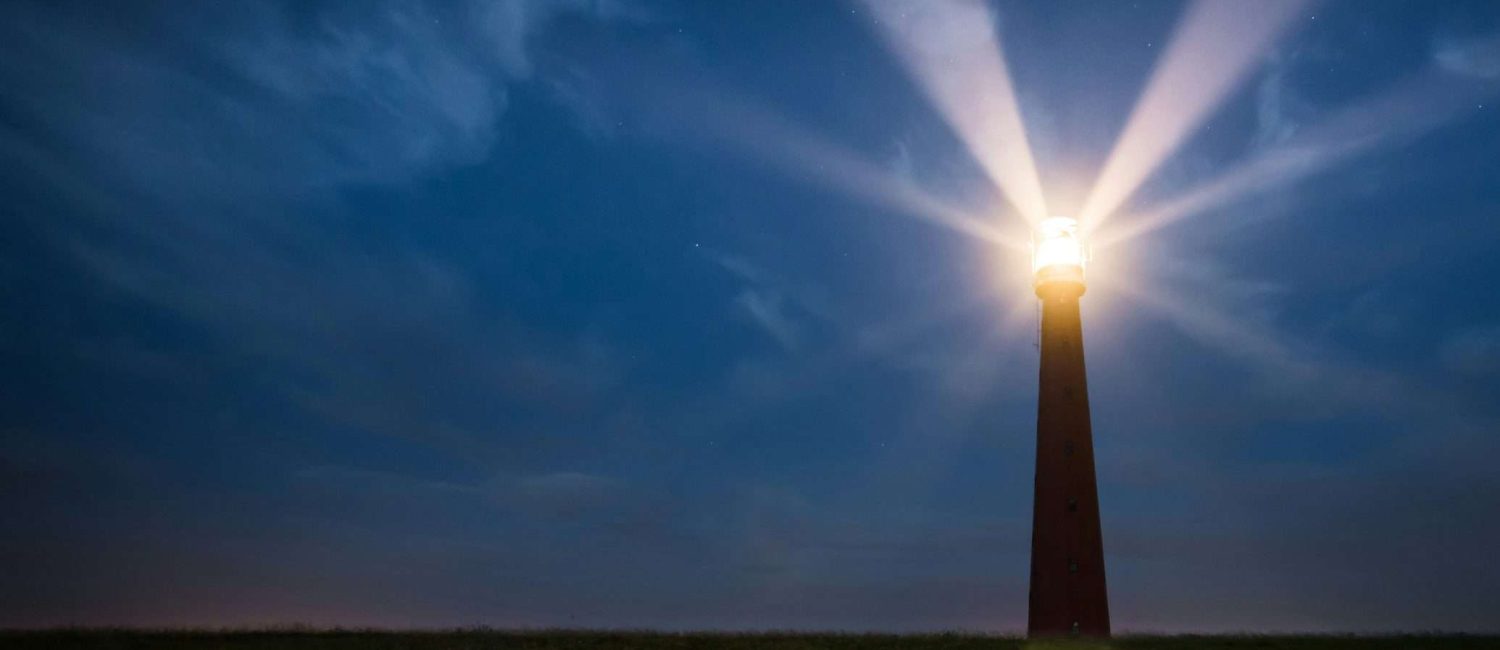
Cam’s lumbering gait reminds me of the trip we took with Dad to Lake Tahoe a few years ago. I’m not ready for the memory, not yet, but it comes anyway. We were hiking along the western shore, looking for the lighthouse we saw on the sign at the trailhead. Dad had been so excited, chattering with Cam as he walked, pointing at the water and going on about the history and importance of lighthouses. How beautiful they are, how instrumental to the safety of sailors.
“They’re always there,” Dad said. “A constant, even though there are different keepers who take charge of the light and keep it running year after year. Sailors need them to find their way if they get lost or confused out at sea. They’re like giant flashlights for boats!”
Cam wasn’t matching his Poppie’s enthusiasm. He was six, and his legs were tired, and as he trudged along the rocky path he swatted at swarms of mosquitoes. When we finally reached the “lighthouse,” everyone stared in silence. It was a moss-covered pole with a black box on top.
“Assholes,” Dad said. “False advertising. That’s not a lighthouse.”
“I’m hungry,” Cam said.
We ate apples on a rock by the shore, the waves lapping quietly at our feet.
“Sometimes that’s the way it goes, Camo,” Dad said. “You’re expecting a lighthouse and you get a lamppost. Oh well!”
Cam threw stones at a log floating by, not nearly as disappointed as Dad about the lamppost. For Cam, the lake, and being with Poppie, was enough.
“I’ll take you to see some real lighthouses someday,” Dad said. “And when you’re a teenager, we’ll hike the PCT.”
Dad had been talking about that PCT trek ever since. They were going to go as soon as Cam turned 13. Dad had researched the proper gear, the camel packs, and, of course, the flashlights.
Now, loading Cam’s baseball bag into the back of the car, I feel the weight of what will never be. It hurts in a different way, this future loss. But I like hearing Dad’s voice in my head. It’s loud and clear, cutting through the fog in my brain. Maybe I’ll take Cam hiking soon. Look for a lighthouse.
As we drive home, Cam digs through the postgame snack bag, chewing happily and running through the game highlights from his spot in the back seat. I keep wondering how I’m going to do this. Get him some ice cream first? Or would that ruin ice cream? And how exactly do I begin? Nine innings and I still don’t know. Maybe there is never enough time.
I keep driving.
We’re almost home when Cam says, “Did you talk to Poppie today? Is he back from the doctor?”
“Cam,” I say. I have to pull over and stop the car. Here, then. This is where I tell him. In front of a stranger’s house on a dark street. Cam catches my eyes in the mirror. I feel the air shift.
“What?” he says.
I turn so that I’m facing him. Then, speaking slowly—so that we both will understand—I tell him. That something went wrong during the procedure. That no one expected this. That the doctors did everything they could. That he wasn’t in any pain. That it happened so quickly. That—
“He died?” Cam balls his fists.
“Yes, honey. I’m so sorry.” I’ve had hours to rehearse these words, but they still sound wrong. They aren’t special enough. Not for his Poppie. But there they are.
Cam looks down at the crumpled wrappers in his hands. His head and his shoulders drop, sinking into the seat. I rush out of the car and come around to the back, climbing in next to Cam and pulling him to me. We hug like this in the back seat, with the Cheetos crumbs surrounding us and a Capri-Sun leaking onto the floor mat. After a few minutes, Cam says he wants to go home.
As I drive us the rest of the way, I watch Cam in the rearview. He stares at his lap, unmoving, a slumped statue with orange-crusted fingertips. I’m trying to breathe, to keep my eyes clear so I can drive, but that burning rage returns to my fingers, my eyes, my entire body. How can this be? Dad is gone, Cam’s Poppie is gone, and I am lost.
Maybe eventually I’ll see all this in a different light. Find some hidden thing shining from the depths. But for now I can only see it for what it is: a massive hit. The bruise is too fresh to even see the colors yet and I have no idea where to apply the ice. When I get to L.A., I know I’ll collapse and feel all of it. I’ll let my own grief explode, and I’ll take cover under a blanket. But tonight, I’m still up.
When we get home, Cam takes a shower. I put out some food for dinner but we don’t eat.
Then, much later, when Cam’s head hits the pillow, that’s when the questions occur to him. That’s when he cries and wants me to hold him. In the darkness of his bedroom, we tuck deep under the covers together and ride it out. I hold tight to him, smelling his soapy skin and wet hair with every shaky breath. Eventually, Cam’s shuddering calms a little and he lifts his head.
“Can we read?” he asks.
“Of course,” I say. “Which book?”
Cam gets up and shuffles through his bookshelf in the pitch black room, returning when he’s found the one he wants. He crawls back in bed without turning on the light, and I understand. He wants us to read in the dark. It turns out I have exactly the right flashlight for that.
3 replies on “Left Field”
So beautiful, Krissy. Of course you made me cry. I really loved your Dad. He had so much impact on my life and left a hole in my heart.
Love the line “ Every crying boy is my boy.”
A suspenseful story–as soon as the tension broke, as soon as she was faced with telling her son what had happened, my thought was–now she must also face her own grief and maybe that is part of why it’s been so hard for her to tell Cam. She’ll have to put it in words and that makes it real.
I just have one small quibble: “clunky German engineering”. National stereotyping can be tricky and I don’t believe this one is accurate. All my life I’ve been hearing that the Germans are excellent at technical stuff, much better than we are in North America. That’s why my partner used to order equipment he needed from Germany often.