Blueberry Net
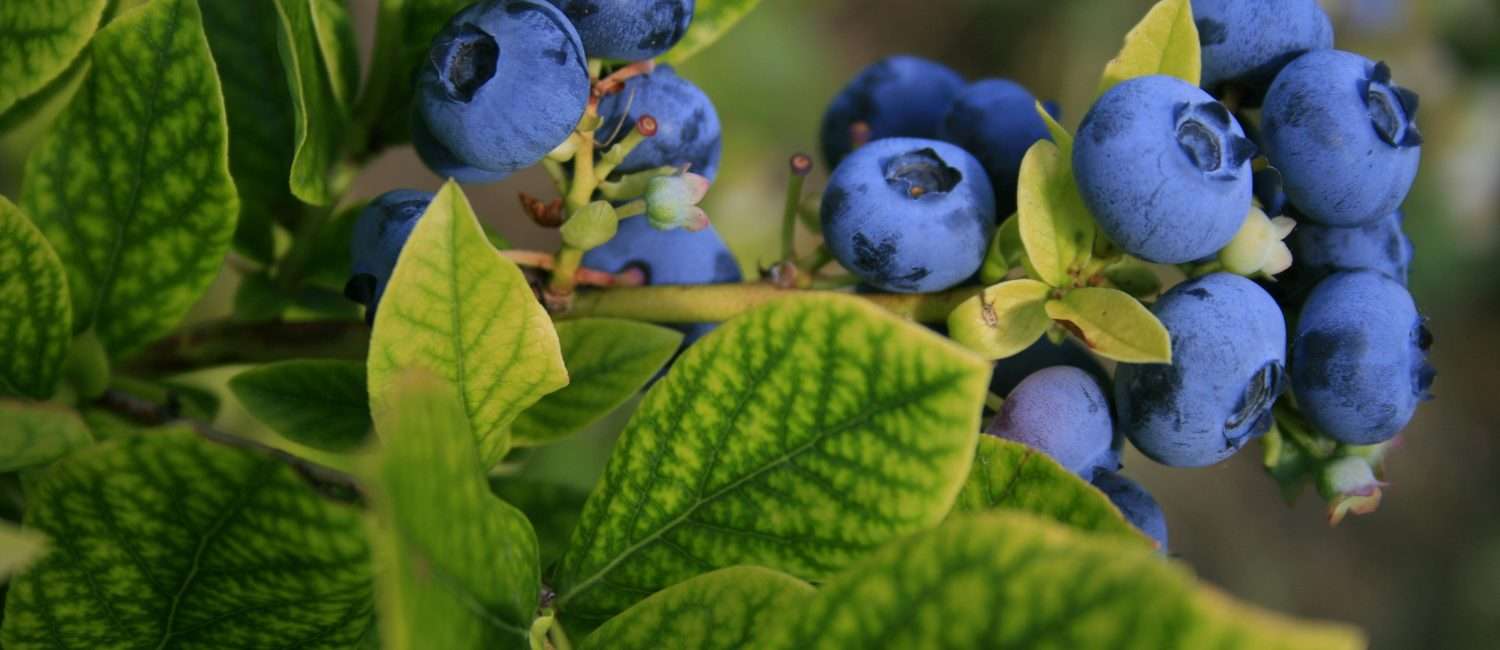
In late June, I take my children to their grandparents’ five-acre property to collect blueberries. Nestled in the hills of Appalachian Ohio, our homesteads are only half a mile apart and lie along the same gravel road in the same intentional community where my husband grew up.
When we moved here with our two children last year, my in-laws gave us four blueberry bushes as a welcome gift. The young plants surprised us by yielding abundantly almost as soon as we put them in the soil. This year, we failed to cover the bushes with a net, and the birds picked them clean before we could enjoy their fruit.
But the dozen or so bushes that flank my husband’s childhood home are heavy with berries. My mother-in-law has collected quart after quart, braving the summer heat in a linen shirt and straw hat. And still, ripe clusters of indigo berries threaten to rot on their boughs.
We walk up the driveway, past the enormous garden with its feathery fronds of asparagus and deep green kale leaves to the blueberry bushes on the south side of the house. Each group of bushes is protected by a net held up by large garden hoops. We make our way to the patch nearest the house, and I lift the net so that my five-year-old son and two-year-old daughter can enter.
We fill our mouths before we begin dropping plump berries into blue cartons. Eventually, my children tire of berry picking and huddle together in the shade between bushes. I continue plucking and dropping, plucking and dropping, the sun beating down on my head. In a quiet moment, I hear a sound—a rustling. At first, I think it might be one of the cats paying us a visit, but then I see the net move, and I know exactly what it is.
Just last week, I freed two birds trapped inside our neighbors’ blueberry net. They had flown in through a tear in the mesh, lured by candy-sweet berries. The birds were fluttering wildly, darting from one end of the enclosure to the other, unable to find their way out. I held the net high, and my son chased them through the opening.
Here, in my in-laws’ blueberry patch, a robin has been less lucky. The bird never managed to make it through the net and, instead, got tangled in its green fibers.
Worried that the frightened bird might bite or claw me, I run around the house, and fetch a set of garden gloves from the bench beside the lily pond. When I return, I take the robin into my hands.
“It’s okay,” I whisper. “I’m going to get you out of this mess.”
The children watch as I attempt to free the bird from the strands looped around its wings, neck, and feet. But every time I tug, the net seems to tighten somewhere else, threatening to strangle the robin or snap a bone.
“How did you do this?” I ask the bird. Then I look at my son and say, “Go inside and get Grammy’s scissors. They’re in the middle drawer by the fridge.”
While we wait, the bird struggles in my hands.
“It’s okay,” I say again, even though I’m not so sure. “We’re not going to hurt you.”
My daughter cautiously draws near and asks, “Pet the bird?”
“Very softly,” I instruct. “Birdy is sad.”
“Sad bird,” she says, reaching toward its head. Its yellow beak snaps at her, and she yanks her hand away.
“Here.” I take her tiny fingers and run them along the gray plumage on the bird’s back. “So soft.”
Even through the gloves, I can feel the robin’s warmth. I can feel the rapid beating of its heart.
We wait and wait, and finally my son returns, scissors in hand. I cut one strand. Then another. Then another. I pause, worried that my in-laws will be upset by the sizable hole I am creating in their net, and then I continue cutting.
At last, the net falls away, and I relax my grip on the bird. It shoots out of my hand, and as it lifts toward the trees, so does my heart.
Then it tumbles into the overgrown grass beneath a dogwood tree. I watch, breath caught in my throat. My children watch too, waiting for the robin to re-emerge.
“Is it okay?” my son asks.
“I don’t know,” I say. “I hope so.”
“Let’s go see,” he says, starting toward the dogwood.
But I stop him. I stop him because I don’t want us to scare the bird any more than we already have. I stop him because how am I supposed to explain that, sometimes, the good things we do aren’t enough? That in an instant, a handful of sweetness can become a fistful of suffering, of sadness, of loss?
I take my children’s hands and lead them back toward the berries, back beneath the blueberry net. Here, the bird’s liberation remains a possibility—and whatever grief might have been stays hidden in the grass.
7 replies on “Blueberry Net”
Beautiful story Lucy, it took me back to a couple of summers ago to our community garden. We had a bird stuck in the net too. They love haskaps.
Many years ago a teen-aged housemate and I freed a small bird from a pea net. Its neck was tightly entangled and we managed to free it with scissors. It was alive, but limp. We took it inside and put it under an upturned laundry basket with seeds and water, hoping it would recover. In the morning it was perched on the rim of the water bowl. We took it outside and let it go. As if knowing not to fear us it stayed, picking at seeds on the ground–it was as if it knew we had helped. After a bit, it flew off, high above the trees.
I enjoyed the lovely imagery and sincere emotion that pulsed throughout this essay. And these lines in particular deliver such maternal strength: “… sometimes, the good things we do aren’t enough? That in an instant, a handful of sweetness can become a fistful of suffering, of sadness, of loss?”
Thank you for this tender narrative.
“It shoots out of my hand, and as it lifts toward the trees, so does my heart.”
And so did mine. I, too, prefer the not knowing–in this essay, anyway.
Beautiful work, Lucy. I can’t get over your talent for writing about food and environment. Gorgeous imagery.
This was beautiful, and the ending was just perfect!
Beautiful narrative. Thank you for sharing soft, tender words of this small, important moment.
Lovely