
Activism, Resistance, Persistence: A Review of Helen Charman’s Mother State
Mother State: A Political History of Motherhood
by Helen Charman
Allen Lane, Penguin Books Random House UK, 2024; 512 pp; £30.00
Buy BookRecently, I have spent a lot of time thinking about my own childhood in comparison to my sons’—a time pre-internet, when communication was not instant and there was a greater expectation of boredom—and how the demands of parenting seemed different for my own mum than for me, such as her straightforward access to National Health Service (NHS) dentistry and general practitioner appointments. It was during this wistful moment that I initially picked up Mother State, Helen Charman’s examination of the intersection between politics and motherhood. Charman’s book is a historical analysis of British political change from the 1970s to the 2010s, with a focus on mothering, governing, and politicizing the act of child rearing.
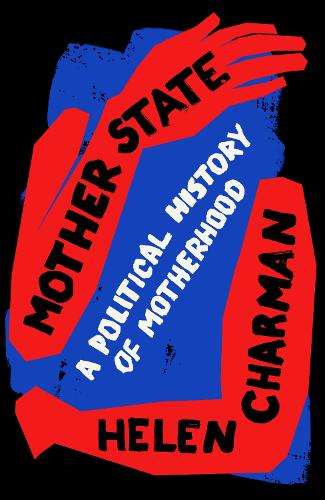
Charman connects “elements that are usually considered distinct and separate: the state of being a mother itself, including but not limited to the physical experiences of pregnancy and birth; the relationship between mothers and the state; the uses the state puts mothering to—its politicization, in other words—and finally, the conception of the welfare state as some kind of maternity entity in and of itself.” Her quiet humor and precise prose provides readers with an engaging and colorful read. Her references are varied, including Bertolt Brecht, Buffy the Vampire Slayer, and Eastenders. Charman’s ideas culminate over the course of the book to build the case that motherhood is a political state, an identity with a societal focus and agency.
In part one of this three-part book, Charman focuses on women’s bodily autonomy and examines the individual’s choice to become (or not become) a mother. She considers circumstances and laws that have caused reproductive choice to become a divisive term. Abortion has been legal within certain limits for decades in the UK. Despite this, Charman documents how legislation continues to be debated and the legality of abortion questioned because lawmakers are often queasy about women having complete control over their reproductive choices. Charman concludes that these lawmakers would rather women’s bodies fall under state control and be managed by the patriarchy.
Charman shows that even the process of giving birth is politicized, with ongoing scandals highlighting the dangers of focusing solely on natural birth. As I write this review, the UK government has called for a national investigation into maternity care in England, where previous repeated failures, such as low staffing, strained resources, and ignoring patients’ requests, have led to the deaths of infants and mothers. Charman notes how during the 2010s “swatches of midwife-led birthing centres and Neighbourhood Midwives services across the UK have been closed, often with very little notice, severely limiting choices for place and mode of birth.” This resonated with me because these financial cuts in maternity care meant NHS birthing class instructors were hesitant to explain caesarean sections, even though many pregnant women I knew would have been better prepared if there had been an initial discussion to help them.
In part two, Charman moves beyond health care and into economic factors influencing the relationship between motherhood and the government, such as housing, welfare benefits, and employment unions. Her argument is that despite the image of the nuclear family constantly evoked by patriarchal politicians, “family roles are flexible, and stretch to include many people both related and not.” Further evidence shows how communal living has provided refuge for those who are victims of domestic violence and those from queer communities who must fight to maintain custody of their children. Flexibility “can be a first step towards building interconnected networks of mutual dependence and support within communities.” Charman argues that this flexibility leaves the state in a more ambiguous situation. This section considers such theoretical discussions against practical actions mothers have taken in modern history to challenge the state, in groups such as Mothers in Action, to improve living conditions with social security payments and long-term reform.
Charman identifies Margaret Thatcher as a “bad mother” figure. Thatcher “repeatedly emphasized her identity as a wife and mother while refuting and actively hampering the feminist gains that had allowed her to succeed in the first place.” Reading the book, it is possible to conclude that those who praised Thatcher’s politically motivated mothering policies—such as encouraging mothers to work outside the home in order to cut social security payments, while still not providing appropriate childcare—paradoxically ignored the form of communal living and privilege Thatcher herself was part of, where others cared for her children. Distancing herself from this reality was an entirely political move.
Charman argues that Thatcher was out of touch elsewhere too, such as with her expectation that wives of striking coal miners in 1984 and 1985 would disagree with the strike and compel their husbands to go back to work. However, as the book argues, these mothers worked, not to prioritize their individual families, but to support communities through difficult times—as exemplified in the group Women Against Pit Closures. The wives and mothers of the striking miners fundraised, picketed, and organized rallies while also providing food and other support for families affected by the strikes. Thatcher’s persona as the Iron Lady was part of the militaristic, imperialistic attitude of Britain, but the government’s position was at odds with the reality of its citizens in the 1980s. Charman notes that despite Thatcher’s grandstanding, resistance to military action actually grew.
In part three, Charman focuses on the concept of Mother Ireland and mothers’ resistance to British rule in Northern Ireland during the 1970s and 1980s. The book highlights the less visible role of mothers and women who fought against British military forces and the ongoing battle regarding governance of Northern Ireland. These women resisted British rule through advocacy and armed conflict, despite being vulnerable to retribution. They were all but ignored by the British government. The Troubles, as this period in Northern Ireland’s history is often known, has been portrayed to the rest of the UK and globally as “a masculine concern, despite the fact that it was a war with no official battlefield, waged in homes, schools, nurseries, workplaces, shops and pubs.”
As Charman examines the UK in the late 1990s and early 2000s, she finds politicians still promoting one-dimensional views of the single mother as “a sinner, a scrounger or a saint” when debating how to support single mothers and their families. With a Labour landslide and change of government in 1997, state assistance improved slightly, though here and elsewhere in the book, the evidence of entrenched attitudes towards lone parent families, particularly teenage mothers, pervades, with the underlying belief that those requiring state assistance were cheating. These moral judgments meant that “the division between good and bad mothering was not erased but moved, transposed onto the old binary between the deserving and the undeserving poor.”
Charman continues to follow the “mother state” into the austerity years, after the 2008 financial crash, to look at long-term outcomes for mothers. This broader consideration of motherhood and Charman’s interrogation of the relationship between mothers and the state echoes my experiences, and some of my mother’s, that are rooted in elements of the welfare state. The NHS was created to support the postwar generation, but benefits for children have been gradually chipped away over my lifetime, such as the removal of free milk in state schools, the two-child cap for child benefits, and the fact that those benefit payments have remained below inflation. I also recognize Charman’s observations in my experiences as a mother, with concerns such as the added difficulties of accessing medical appointments, the closure of many Sure Start centres where parents previously accessed resources for preschool children (similar to Head Start in the US and Australia), and the effects of economic austerity on community resources. I am constantly, like Charman, reckoning with “the false memory I cultivated as a child of a kind of welfare state I never knew” and the current limit of this care from the state for myself and my children. It leaves me asking what I can teach my children to expect from the state.
Charman ends the book with the idea that “stories about motherhood are stories about giving and taking,” and “these are difficult times. We have to construct conduits for each other.” Her argument is that these connections become community support alliances that allow us to resist governmental oppression and to fight for the rights of our children. Charman identifies the act of mothering as a political state that continues to resist, act, and improve, celebrating a role that is often reduced and undervalued by those who govern us. Many of the political issues discussed by Charman—health care, social care, poverty—still require our focus as much as they ever did. In an increasingly fractured and polarized society, joining together is more crucial than ever.