
Purity Culture’s Exertion Over Women in Anna Rollins’s Famished: On Food, Sex, and Growing Up as a Good Girl
Famished: On Food, Sex, and Growing Up as a Good Girl
by Anna Rollins
William B. Eerdmans Publishing Company, 2025; 240 pp; $24.99
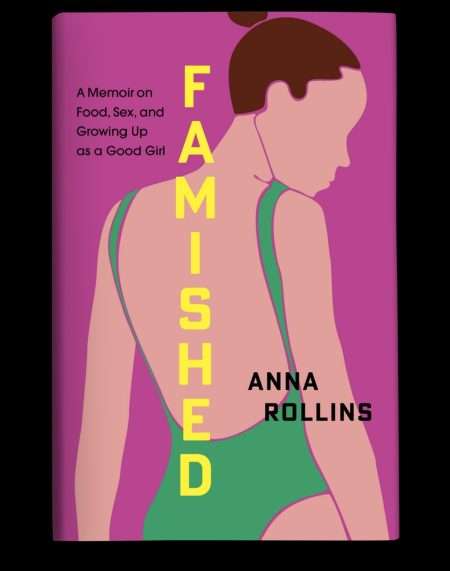
Buy BookAs a mother of adolescent girls who frequently criticize their bodies, the surge in popularity of memoirs that showcase the evolution from girlhood to womanhood delights me to no end. These books highlight the female experience and showcase the complexity of living in a female body. As such, if you’ve ever attended a Christian service or youth group and also struggled with an eating disorder, prepare for a revelation in Anna Rollins’s captivating memoir, Famished: On Food, Sex, and Growing Up as a Good Girl, in which she sutures together evangelical purity culture, diet culture, and body dysmorphia in a way that makes me wince.
Raised Baptist in Appalachia, evangelical women like Anna Rollins are saddled with the triple whammy of keeping themselves pure for marriage, dressing and acting in a way that does not excite men, but later within marriage, remaining attractive and thin. “Even at the age of ten, I knew that my flesh was a liability and a stumbling block to men. The main way to control men’s insatiable lusts and desires, I learned in Bible class, was to control my own body, to be fully clothed, to be chaste. The reward for my good and careful behavior would come in the form of a savior—that is, a husband,” Rollins writes. Her exhaustive efforts prove pointless and she places her faith in Jesus—and diets: “His righteousness could be ours with a sincere precisely worded prayer. I prayed over and over, I tried, truly, but maybe that was the problem—that I wasn’t supposed to try; I just needed to learn to stop wanting so much and receive. But I didn’t know how. And I didn’t know what to do with my body.”
All of this takes its toll on adolescent Rollins and she discovers “maintaining strict control over what I ate was also my way of staying in control of my emotions.” She becomes obsessed with accounts of other people’s eating disorders and watching a friend’s mom compulsively exercise, but when she falters and eats part of a scone or a few fries, she forces herself to “pay for her sins” with dieting and exercise. This is further enforced during church services when male pastors instruct the girls and women to maintain their virtues by controlling their appetites. It isn’t until college that Rollins begins to see “how the rigid food rules I’d developed for myself hung like a complex padlock on its door.”
Eventually Rollins marries and here is where the book blossoms beyond an eating disorder memoir into a sharp critique of purity culture and its influence on the relationship countless women have with their bodies and their sex lives. The perfect woman she aimed to be as a girl does not exist, and it is by taking a critical look at this way of life that she takes first steps toward recovery. The author writes, “When we’re taught that our inherent intuitive cravings are bad, it really affects our ability to enjoy sex or food.” She interviews several women who, like herself, are unable to have sex without discomfort and investigates “desire and morality, restriction and obedience,” only to discover that pain during sex—something she has experienced in her own marriage—is common for women affiliated with Christianity’s purity culture.
The use of research seamlessly blends with Rollins’s personal story. While books once fueled her eating disorder, they, along with writing, heal Rollins, and so does her family. During her husband’s mental health crisis, when she is also juggling life with a toddler son, she tries to shield others from his struggles only to discover that the added stress exacerbates her anxieties. Within days of giving birth to her second child, another son, she evaluates her post-partum belly.
I went to my bedroom. I thought about taking a nap. But I felt pretty good. I didn’t feel tired. Maybe if I just do one, and I loaded a postnatal workout video. Half an hour. I’ll stop if I start feeling too bad. . . . By the end of it, I’d broken a cold sweat.
As a new mother, the desire to rule her body cannot be easily conquered, and she struggles to prevent her issues from becoming her children’s. Rollins and her husband eventually have three children, including a daughter, and ultimately motherhood compels her to seek safer ways to commune with food—and life.
Throughout the book, Rollins pushes against the narrative that Christianity is all bad, writing, “When I consider heaven now, I do not think of a place far away. . . . Heaven is a revelation: God cares about life on earth right now. The life that we live in our blessed bodies.” She discovers further insights about the Christian faith through her conversations with other women and in the community she creates through this rigorously explored book. In one conversation, a woman who endured 17 pregnancy losses explains how she used her body to reform for those losses: “She and other women in church kept dietary accountability by participating in the Weigh Down Workshop, a pray-yourself-thin, non-diet that focuses on feeding a person physically and emotionally.” The compulsion to judge oneself by any one metric remains a hazard for any human, especially evangelical women who, like Rollins, are more apt to question their own instincts.
Some contend that as consumerism increased, one way to demonstrate physical restraint amid material abundance was an intensified focus on disciplining the physical body. Likewise, as society became more individualistic rather than communal, we directed our efforts toward perfecting the self. In this same environment, Christian literature became more concerned with transformation via self-realization rather than salvation. “I once was lost but now am found” had shifted into “I once was fat but now am thin.”
The antidote Rollins points to is self-compassion, letting oneself feel famished and then feeding that very hunger. Famished is about forgiveness and coming to terms with religion, life, disordered eating, and maybe being better for all of it. A patriarchal society benefits from the silence of its victims, Rollins notes, and in speaking up, she is able to move beyond simply hating or loving her body. “My whole life was a ledger of deposits and withdrawals,” she says, but with Famished she creates an endowment to benefit us all.